Do You Need Travel Insurance for Bolivia? What’s Worth Covering
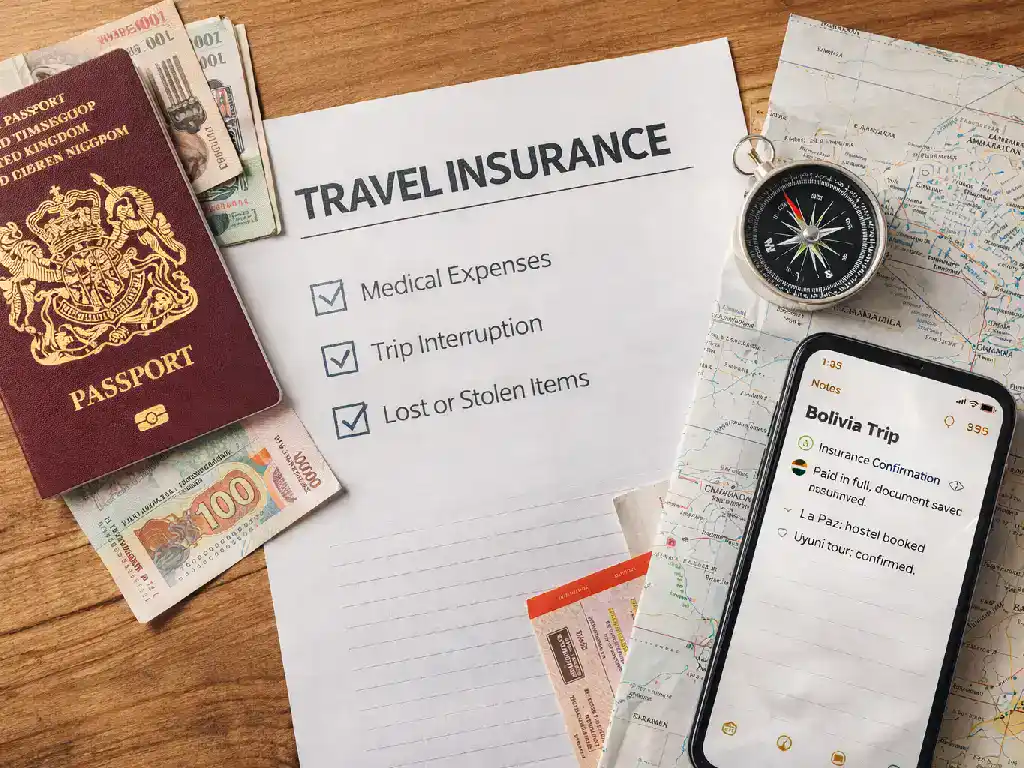
Travel insurance is one of those things most people know they should think about… right up until the moment they’re booking flights, checking hostel reviews, & wondering whether Bolivia is more “adventure” or more “standard backpacking with a few bumps”.
I was the same. Bolivia doesn’t scream danger, but it also isn’t a resort-style destination where everything runs smoothly & help is always five minutes away, something anyone who’s followed a guide to exploring Bolivia will recognise quickly. It sits somewhere in the middle – incredible, occasionally chaotic & not always predictable.
So do you actually need travel insurance for Bolivia? Or is it one of those things people buy out of habit, just in case?
This isn’t a guide to the “best” insurance or a sales pitch in disguise. It’s a realistic look at Bolivia travel insurance – what’s genuinely worth covering, what usually isn’t, & how to decide whether it matters for your trip.
Is Travel Insurance Required for Bolivia?
Short answer: no – travel insurance isn’t a legal requirement for entering Bolivia, much like how Bolivia’s entry requirements don’t currently mandate proof of coverage at the border.
You won’t be asked for proof of insurance at the border & airlines don’t check it either. Plenty of people arrive without it, travel around, & leave without ever needing to think about it again.
That’s often where the confusion comes in. If it’s not required, it feels optional. And technically, it is.
The difference is that Bolivia doesn’t require travel insurance, but it also doesn’t quietly absorb costs if something goes wrong. Medical care, transport changes, missed connections, accidents – those are usually handled upfront, not billed later. Having insurance doesn’t change the rules, it just changes who pays when plans wobble.
So while Bolivia travel insurance isn’t mandatory on paper, it can matter in practice depending on how you’re travelling, where you’re going, & how much flexibility you want if things don’t go exactly to plan.
Why Travel Insurance Actually Makes Sense in Bolivia
Bolivia is one of those places where nothing feels particularly risky… until you realise how far you are from easy fixes. Things usually work out, but when they don’t, they tend to do so quietly & expensively.
That’s where travel insurance earns its keep – not through dramatic emergencies, but through small, annoying, very real moments.
It’s worth noting that this unpredictability doesn’t mean Bolivia is unsafe – it simply operates differently, a distinction that comes up often when people ask is Bolivia safe for tourists.
Healthcare in Bolivia as a Traveller
Healthcare in Bolivia is a mixed bag. In bigger cities like La Paz or Santa Cruz, private clinics can be perfectly fine, but they aren’t free, & they usually expect payment upfront. Public hospitals exist, but facilities vary a lot, & English isn’t a given.
If you need treatment beyond something minor, you’ll almost certainly be asked how you’re paying before anything else happens. That’s where Bolivia travel insurance quietly becomes useful. You’re not arguing costs while feeling unwell, & you’re not trying to work out whether a clinic takes cards, cash, or something else entirely.
It’s not about fearing the system – it’s about not adding admin stress to a situation that’s already uncomfortable.
Altitude, Accidents & Unpredictable Stuff
A lot of travel in Bolivia involves altitude, long distances, & transport that doesn’t always behave as planned. Most of the time that’s part of the charm. Occasionally, it’s where things wobble.
Altitude sickness, minor falls, food reactions, awkward bus journeys, tour mishaps, especially in high-altitude regions like the Bolivian Altiplano – none of these are rare, & most aren’t serious. But they can still mean doctor visits, changed plans, or unexpected nights in places you didn’t intend to stay.
This is where travel insurance for Bolivia makes sense. Not because Bolivia is dangerous, but because it’s unpredictable in small ways. Insurance doesn’t stop things happening – it just means you’re not mentally tallying costs while trying to deal with them.
What Your Travel Insurance Should Cover in Bolivia
This is where Bolivia travel insurance either quietly does its job or lets you down. You don’t need an extreme, bells-and-whistles policy, but there are a few areas that are genuinely worth checking before you go.
Medical Treatment & Emergency Evacuation
This is the big one.
Basic medical cover is important, but emergency evacuation is what really matters in Bolivia. If something happens in a remote area – on the Altiplano, during a multi-day tour, or far from major cities – getting you to proper care can be complicated & expensive.
Most people never need it. But if you do, evacuation costs can climb very quickly, especially if air transport is involved. This is where cheaper policies sometimes fall short, so it’s worth checking the wording rather than assuming it’s covered.
You don’t need to obsess over numbers, just make sure evacuation is clearly included.
Adventure Activities, Tours & Transport
Bolivia has a habit of blurring the line between everyday travel & “activities”.
Bus journeys can be long. Minivans are common. Tours involve rough roads, early starts & a bit of controlled chaos. Things like hiking, cycling, or even something like the Death Road bike ride tour don’t always register as “adventure travel” until you read the fine print.
If you’re doing anything remotely active, it’s worth checking your policy doesn’t quietly exclude it. Most standard travel insurance for Bolivia covers general activities, but assumptions are where people get caught out.
Theft, Delays & Lost Stuff (Low-Drama Version)
Theft & delays happen, but usually in fairly boring ways.
Phones go missing. Bags get delayed. Buses don’t show up when they’re meant to. None of this is dramatic, but it can be expensive & inconvenient without cover.
This isn’t the section to overthink. If your policy covers lost or stolen belongings & basic travel delays, that’s usually enough. You’re aiming for annoyance protection, not perfection.
What Usually Isn’t Worth Worrying About
Travel insurance has a way of making everything feel urgent. Pages of exclusions, scary hypotheticals, worst-case scenarios. In reality, most trips to Bolivia don’t require that level of anxiety.
There are a few things people commonly stress about that rarely matter as much as they think.
You don’t need a hyper-specialist policy for every possible situation. If you’re travelling normally – buses, tours, walking around cities, the usual stuff – standard Bolivia travel insurance with decent medical cover does the job.
Likewise, you don’t need to insure every single item you own down to the last cable. Losing a charger is annoying. Replacing a phone hurts a bit. Neither is usually trip-ending. Insurance is there to soften real disruptions, not remove every inconvenience.
It’s also easy to overestimate how often things go wrong. Most people travel Bolivia without ever needing to claim anything. Insurance earns its value in the background, not through constant use.
The aim isn’t to eliminate risk entirely. It’s to avoid turning a manageable problem into a stressful, expensive one if something unexpected crops up.
So… Do You Personally Need Travel Insurance for Bolivia?
This is where it gets refreshingly simple.
If you’re travelling Bolivia in a fairly typical way – moving around by bus, doing a few tours, spending time at altitude, staying in hostels or mid-range places – travel insurance is a sensible safety net. Not exciting, not dramatic, just quietly useful if something nudges your plans off course.
If you’re short on time, heading into remote areas, riding bikes, hiking, or doing anything that adds a bit of unpredictability, insurance starts to feel less optional. Not because Bolivia is unsafe, but because solving problems there can be slower, pricier & more complicated than you might expect.
On the flip side, if you’re in Bolivia very briefly, sticking to one city, travelling cautiously & comfortable taking on some risk, you might decide to skip it. People do. Most are fine. Some aren’t. That’s the honest trade-off.
For me, travel insurance in Bolivia was less about fearing worst-case scenarios & more about peace of mind. Knowing that if something small turned into something bigger, I wasn’t on my own trying to sort it out from a clinic waiting room or a bus terminal.
Bolivia rewards flexibility, patience & a bit of forward thinking. Insurance doesn’t change the trip – it just makes the edges smoother if things wobble.
Bolivia is generally affordable, but even in places where Bolivia is cheap to travel, unexpected medical bills or transport changes can add up quickly without insurance.
Happy travels!