Getting Around Bolivia: Buses, Minivans & Trains
Getting around Bolivia sounds intimidating until you actually do it. Big distances, high altitudes, winding mountain roads… it all sounds like hard work. In reality, it’s mostly just a case of understanding how transport works here & adjusting your expectations slightly – something that comes up often in a complete guide to exploring Bolivia.
Short version? Bolivia runs on buses. Lots of them. Long-distance buses, overnight buses, slightly rattly buses that somehow still get you there. Add in minibuses, trufis & shared transport for local hops, plus the odd train if you’re heading the right way, & you’ve got more options than first-time travellers often expect.
I’ve moved around Bolivia using pretty much everything available – from overnight buses that double as a hotel room, to local minibuses that make absolutely no sense until they suddenly do.
This guide breaks down how getting around Bolivia actually works, what transport you’ll realistically use, what’s worth avoiding & how to get from A to B without overthinking it… or ending up stranded wondering where the bus station even is.
How Do You Get Around in Bolivia? The Short Answer
Short version? Buses do most of the work in Bolivia.
They’re how travellers move between cities, cross regions & cover long distances. Pretty much everywhere you’ll want to go is connected by bus, and once you’ve taken a couple, they’re nowhere near as intimidating as they first sound.
For shorter journeys, especially in cities, local transport fills the gaps. Minibuses, trufis & colectivos run fixed or semi-fixed routes that locals use constantly. They’re cheap, frequent & a bit baffling on day one… then suddenly very normal.
Trains exist, but only on a few specific routes, so most people won’t rely on them. Flights can help if you’re short on time, and car hire is an option too, though it’s rarely the easiest way to get around.
In real terms, it usually looks like this:
- Long distances: buses, often overnight
- Cities & short hops: minibuses, trufis & shared transport
- Odd routes: trains, occasionally
- Tight schedules: domestic flights
It’s not complicated – it just works a bit differently. Once you stop fighting that & let buses take the lead, getting around Bolivia feels a lot less stressful than it first appears – especially if you’ve already looked into “Is Bolivia safe for tourists?”.

Buses in Bolivia (Long-Distance, Overnight & Everything In Between)
If you take one thing away from travelling Bolivia, it’s this: buses run the country.
They’re how locals travel, how backpackers move between regions & how you’ll cover most long distances. They’re not fancy, but they’re frequent, affordable & more reliable than first impressions suggest. Once you’ve taken a couple, the whole system starts to make sense.
How Bus Travel Works in Bolivia
Bus travel is simple & low-tech.
You go to the terminal, find the company running your route, buy a ticket at the counter & get on. Some routes sell out, but many don’t, so most travellers still buy tickets in person.
Terminals can feel noisy & chaotic, but routes are well established & staff will usually point you the right way if you ask.
Expect:
- several companies on the same route
- different comfort levels at different prices
- departures throughout the day & night
It’s not slick, but it works.
Long-Distance & Overnight Buses in Bolivia
For longer journeys, overnight buses are common.
Bolivia is big & roads are slow, so night buses save both time & accommodation costs. Comfort varies – some buses recline well, others less so – & altitude can make sleeping hit or miss, particularly when travelling through the Bolivian Altiplano.
They’re not glamorous, but they’re often the most practical option.
Are Buses Safe in Bolivia?
Generally, yes – with basic common sense.
Locals use buses daily & most travellers have no issues. The main risks are leaving valuables unattended or choosing the very cheapest option without checking the basics.
Keep important things with you & don’t stress if the bus feels a bit rough around the edges – that’s fairly normal, though long journeys at elevation can contribute to altitude sickness in Bolivia for some travellers.
Bus Companies in Bolivia (What to Expect, Not a Comparison)
You’ll see lots of bus companies running similar routes.
Rather than hunting for “the best”, it helps to know that newer buses usually cost a bit more, late-night departures are common & comfort labels aren’t always reliable. What works well on one route might be average on another.
After a couple of journeys, long-distance travel starts to feel routine rather than daunting.
Minibuses, Trufis & Shared Transport in Bolivia
This is the transport you’ll use most for short distances & city travel.
Minibuses, trufis & shared transport handle everyday journeys – getting around cities, travelling between nearby towns, or covering routes where big buses don’t make sense. They’re cheap, frequent & very local.
Once you get used to them, they’re incredibly handy.
What Are Trufis & Minibuses in Bolivia?
Minibuses are small buses or vans running fixed routes, usually with destinations written on the windscreen & someone calling them out as they go.
Trufis are shared taxis that follow set routes. You hop in, pay a small fare & get off wherever suits along that route.
There’s very little signage or structure, but locals use them constantly. Watching what others do & asking nearby usually gets you where you need to be.
Shared Transport & Colectivos – Cheap & Very Local
Colectivos are shared vehicles, often used between towns or on specific routes. They usually leave when full rather than on a schedule.
They’re:
- very affordable
- quicker than waiting for a big bus on short routes
- slightly unpredictable
You might wait a few minutes, or a bit longer. That’s normal.
Getting Around Cities in Bolivia
Cities like La Paz, Santa Cruz & Cochabamba are well covered by minibuses & trufis, even if it doesn’t look obvious at first.
Taxis are easy to find & reasonably priced. Ride-hailing apps exist in some places but aren’t reliable enough to depend on.
Give it a day or two & city transport starts to feel straightforward rather than chaotic.
Trains in Bolivia – Is There One & Is It Useful?
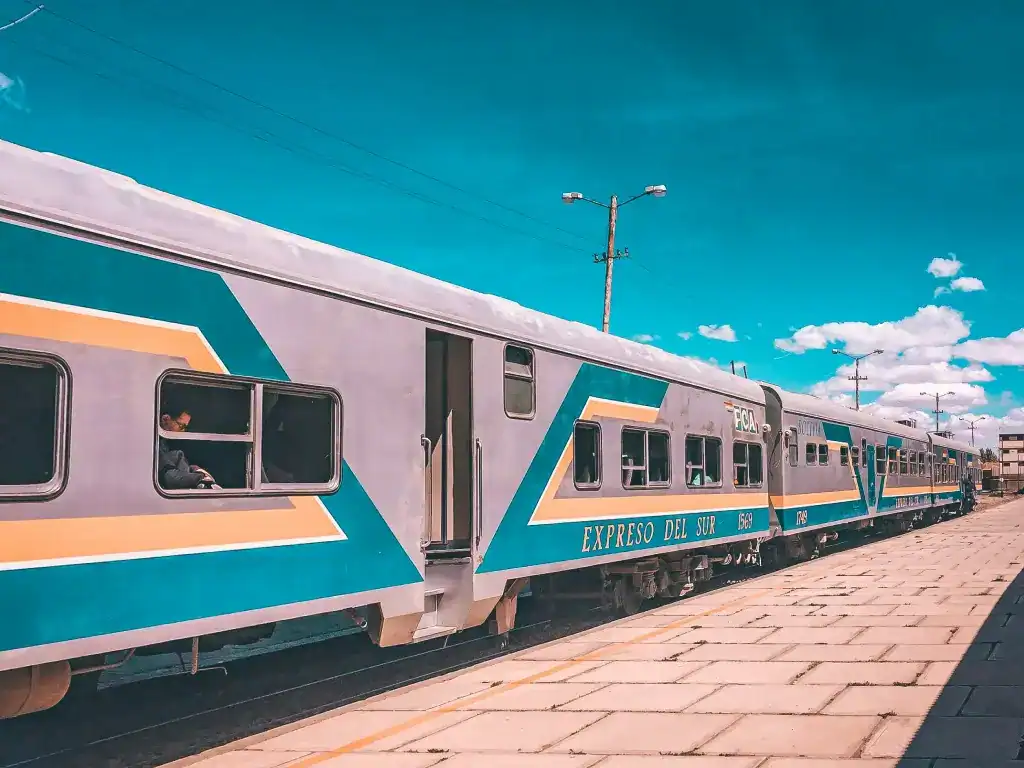
Trains exist in Bolivia, but they’re very limited & not something most travellers rely on.
They mainly serve a handful of routes in the south & east of the country and don’t connect many of the places people usually want to visit. For that reason, trains tend to be more of a curiosity than a core transport option.
Is There a Train in Bolivia?
Yes – but only on specific routes.
There’s no nationwide rail network, no fast intercity trains & no easy way to build an itinerary around rail travel. If a train happens to line up with where you’re going, it can be a relaxed way to travel. If not, buses are almost always the more practical choice.
Train Routes in Bolivia (Who They’re Actually For)
Train routes mostly suit travellers moving through southern Bolivia or crossing borders nearby. They’re slow, affordable & fairly comfortable, but they won’t save time.
For most people, trains are optional rather than useful. Nice if the route fits. Easy to ignore if it doesn’t.
Other Ways to Get Around Bolivia (Flying & Car Hire)
Buses do most of the work in Bolivia, but there are a couple of alternatives worth knowing about – mainly if you’re short on time or travelling for specific experiences like the Death Road bike tour in Bolivia.
Domestic Flights in Bolivia
Domestic flights can save time on long routes, especially if you’re flying to La Paz, one of Bolivia’s two capitals, or other major cities. They’re reasonably priced by regional standards & fairly reliable.
That said, flights don’t reach many smaller destinations, so they’re more of a supplement than a replacement for ground transport. Most travellers still end up combining flights with buses.
Is It Safe to Rent a Car in Bolivia?
Car hire is possible, but it’s rarely the easiest option.
Road conditions vary, signage is limited & driving styles can be… optimistic. Add altitude, mountain roads & unpredictable weather, and it’s not something most travellers find relaxing.
For short stays or remote regions, organised transport or buses are usually simpler & less stressful.
Common Questions About Transport in Bolivia
For the most part, yes. Locals use them constantly & most travellers get around without any issues. Keep your valuables close, especially on overnight buses, & don’t do anything wildly daft. That’s usually enough.
Reliable-ish. You’ll get where you’re going, just not always exactly when you expect. Delays happen, plans change & timetables can be flexible. A bit of patience goes a long way.
Sometimes, in some cities… but it’s hit or miss. Taxis & local transport are far more dependable day to day, especially once you’re outside the main centres.
Yes, plenty of people do. That said, knowing a few basics helps a lot. Transport staff won’t always speak English, but destinations are usually clear enough with a bit of pointing, smiling & guessing.
Final Thoughts – The Easiest Way to Get Around Bolivia
Getting around Bolivia isn’t complicated once you stop expecting it to work like Europe.
Buses will do most of the heavy lifting, shared transport fills in the gaps & everything else is just a bonus if it lines up with your plans. Things don’t always run on time, routes aren’t always obvious & comfort levels vary – but you’ll get where you’re going with a bit of flexibility.
Give yourself breathing room, expect the odd delay & lean into how transport actually works on the ground – especially since Bolivia is cheap to travel, but last-minute changes can still add up if you’re rushing. Once you do, moving around Bolivia becomes part of the experience rather than something to stress about.
If you’re mapping out a route, my Bolivia Backpacking Itinerary breaks it down step by step, & A Traveller’s Guide to Exploring Bolivia ties everything together if you’re still shaping the bigger picture.
Happy Travels!